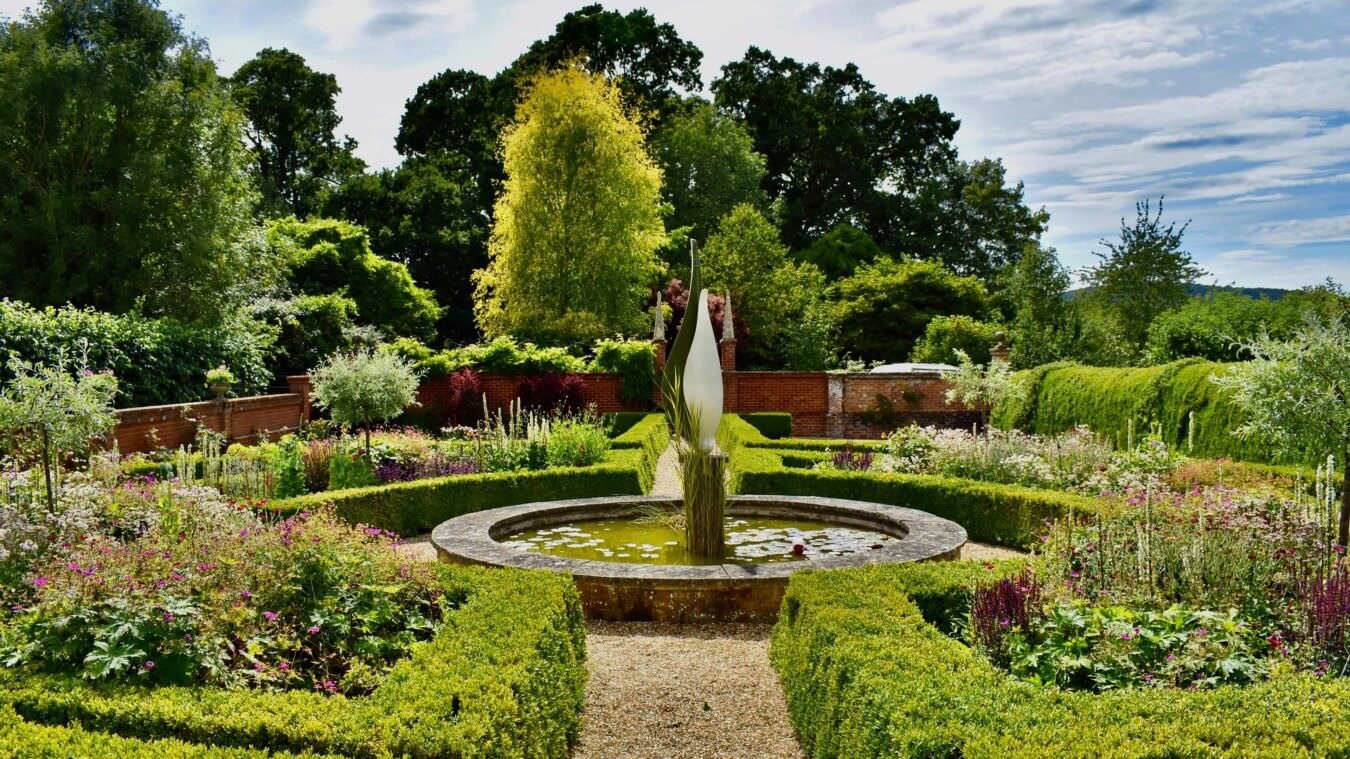
The gardens at Bignor Park are open to group visits in West Sussex, offering guided tours of this historic South Downs estate. Visits can include the gardens and, by arrangement, the house, providing a unique opportunity to explore the landscape and heritage of Bignor Park.
Group visits typically accommodate 30–40 people and are suitable for a range of organisations and societies. Previous visitors have included the Friends of Historic Houses, the Country Land and Business Association, the Georgian Group, the Irish Georgian Society, the Hereford and Worcester Garden Group, and the Friends of the Arundel Festival.
The gardens at Bignor Park are cared for by a dedicated team including Louise Elliott, Kirsten Walker, Peter Sherratt, Andrea Lock, Sonia Hillhouse and Mark Walker. With over 25 years of horticultural and garden design experience, Louise has contributed to award-winning displays at the Chelsea Flower Show, including a Silver Gilt courtyard garden with Fittleworth Horticultural Society and a Gold medal-winning stand in the Great Pavilion with Fleur de Lys, conservatory plant specialists.
An ongoing programme of planting and restoration continues across the gardens, including the renewal of herbaceous borders, the restoration of garden walls and the refurbishment of heritage iron fencing, ensuring the landscape continues to evolve while preserving its historic character.
Hugh Johnson OBE, author and garden expert
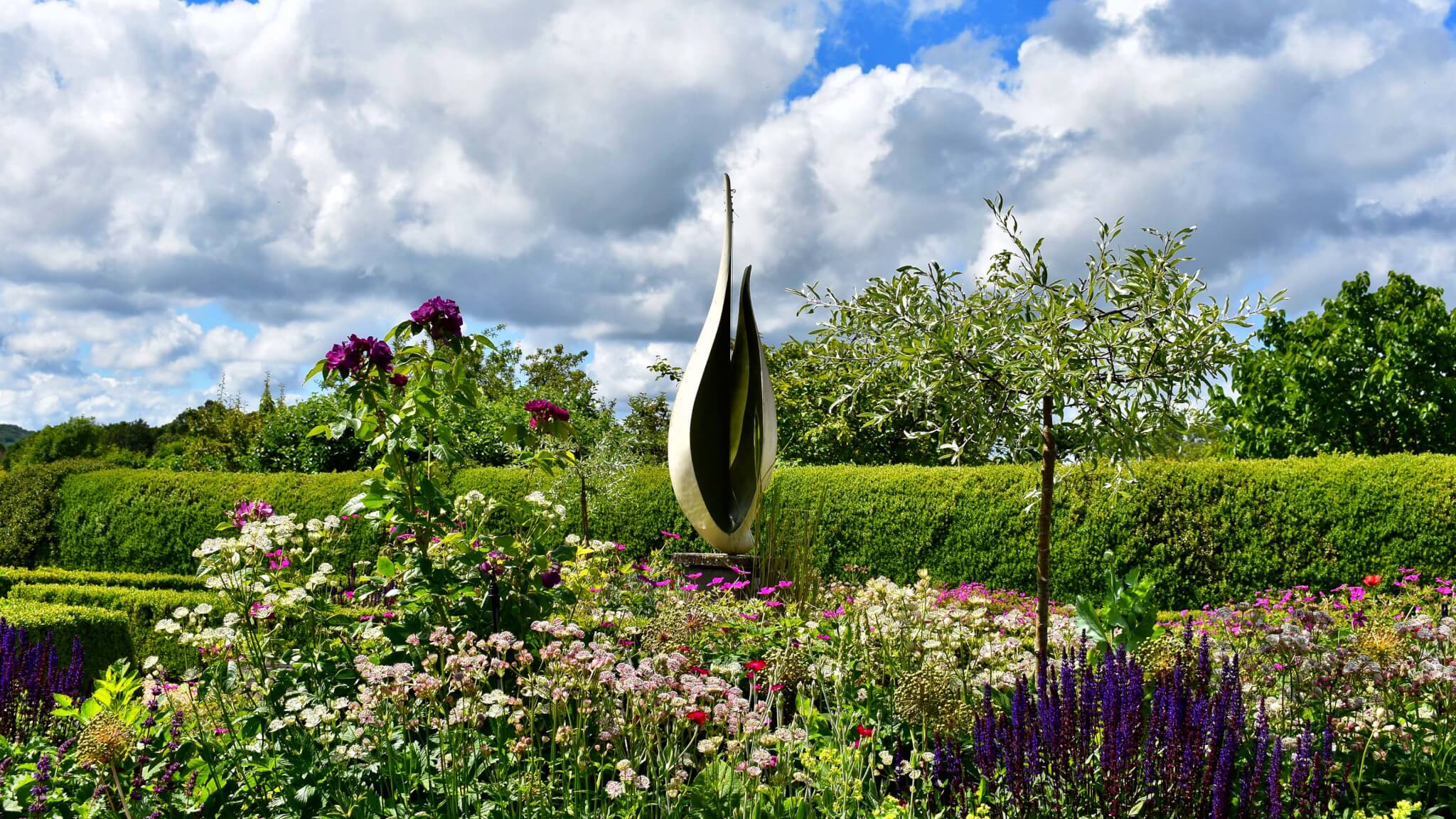
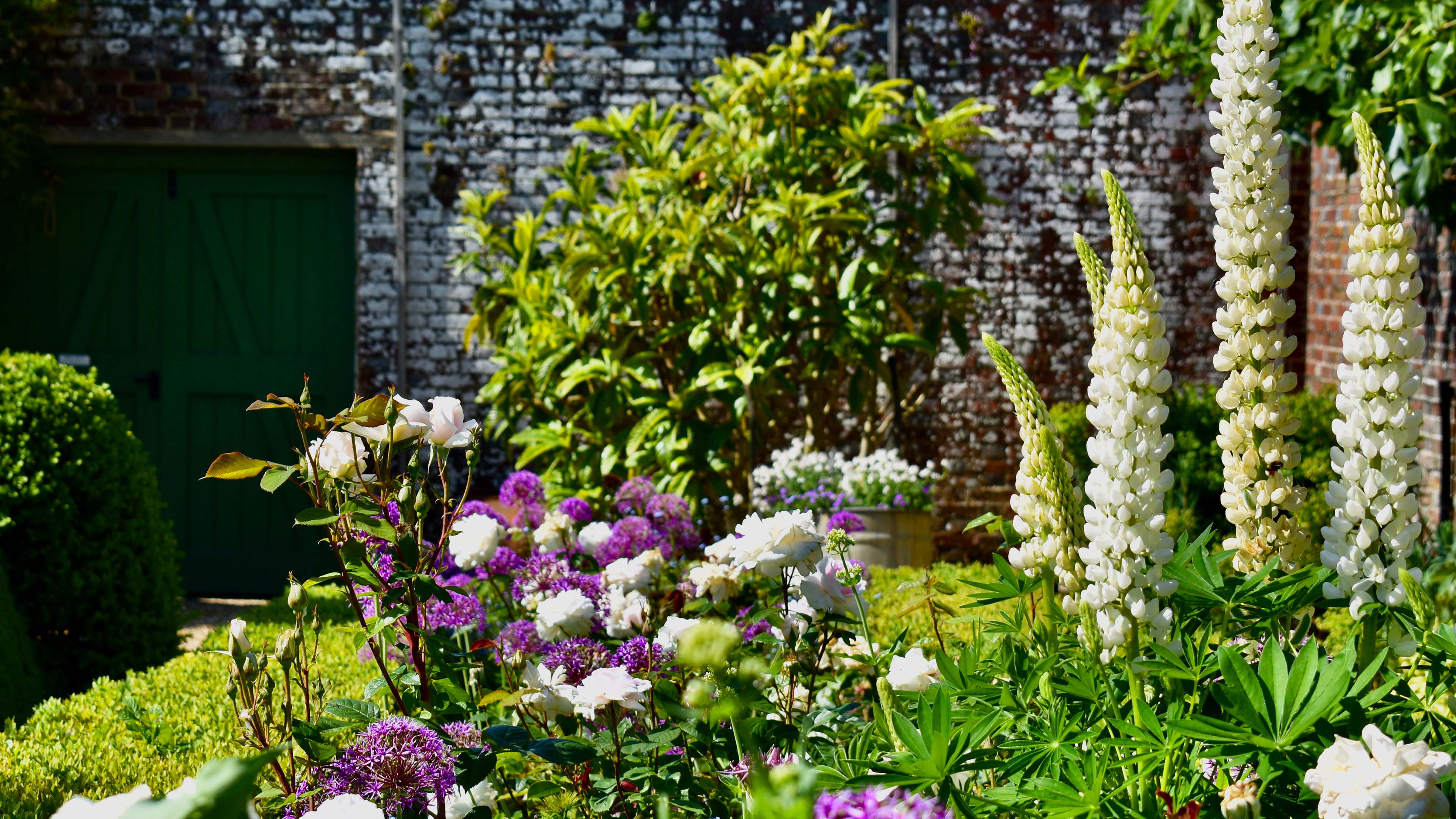
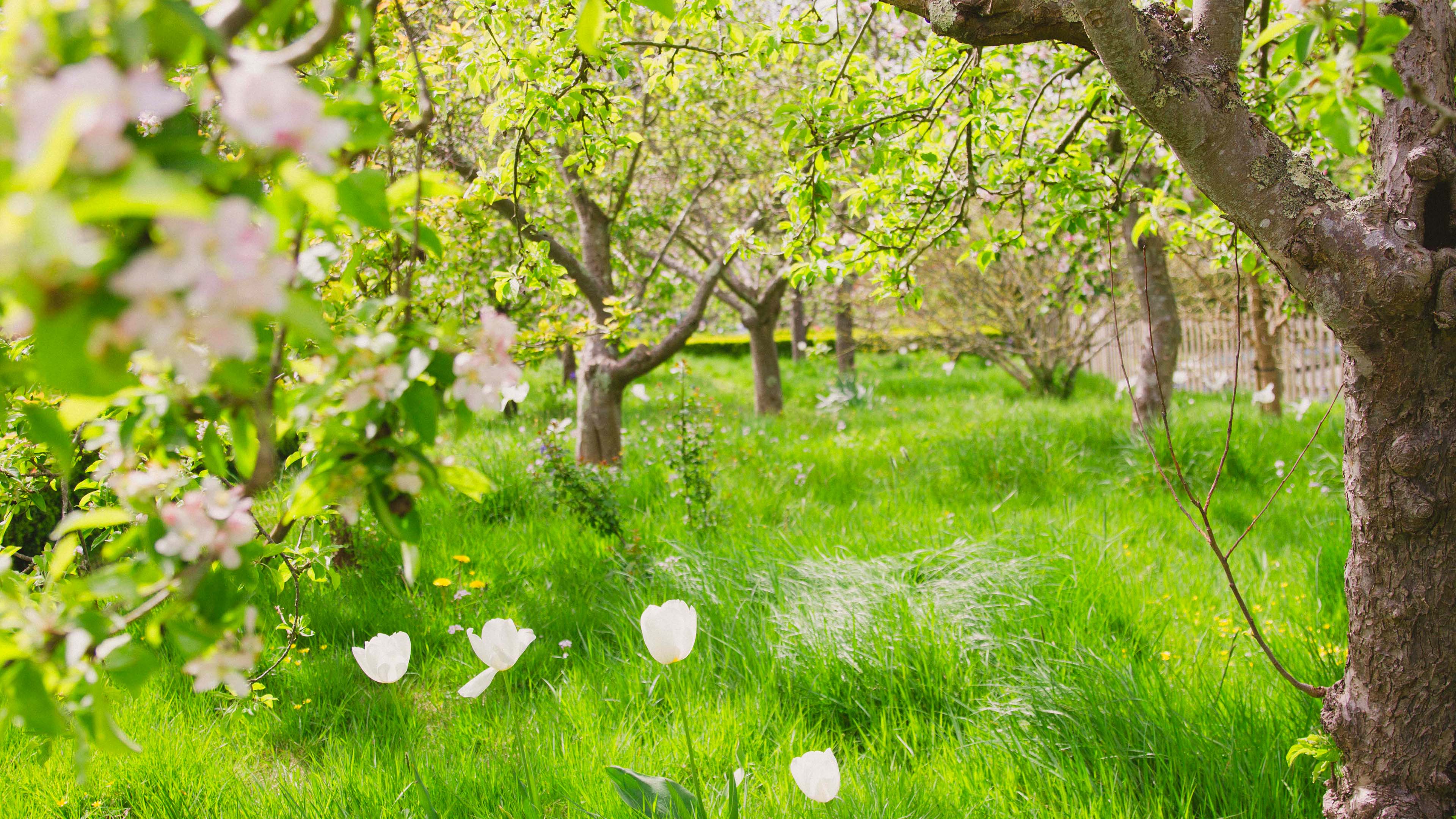
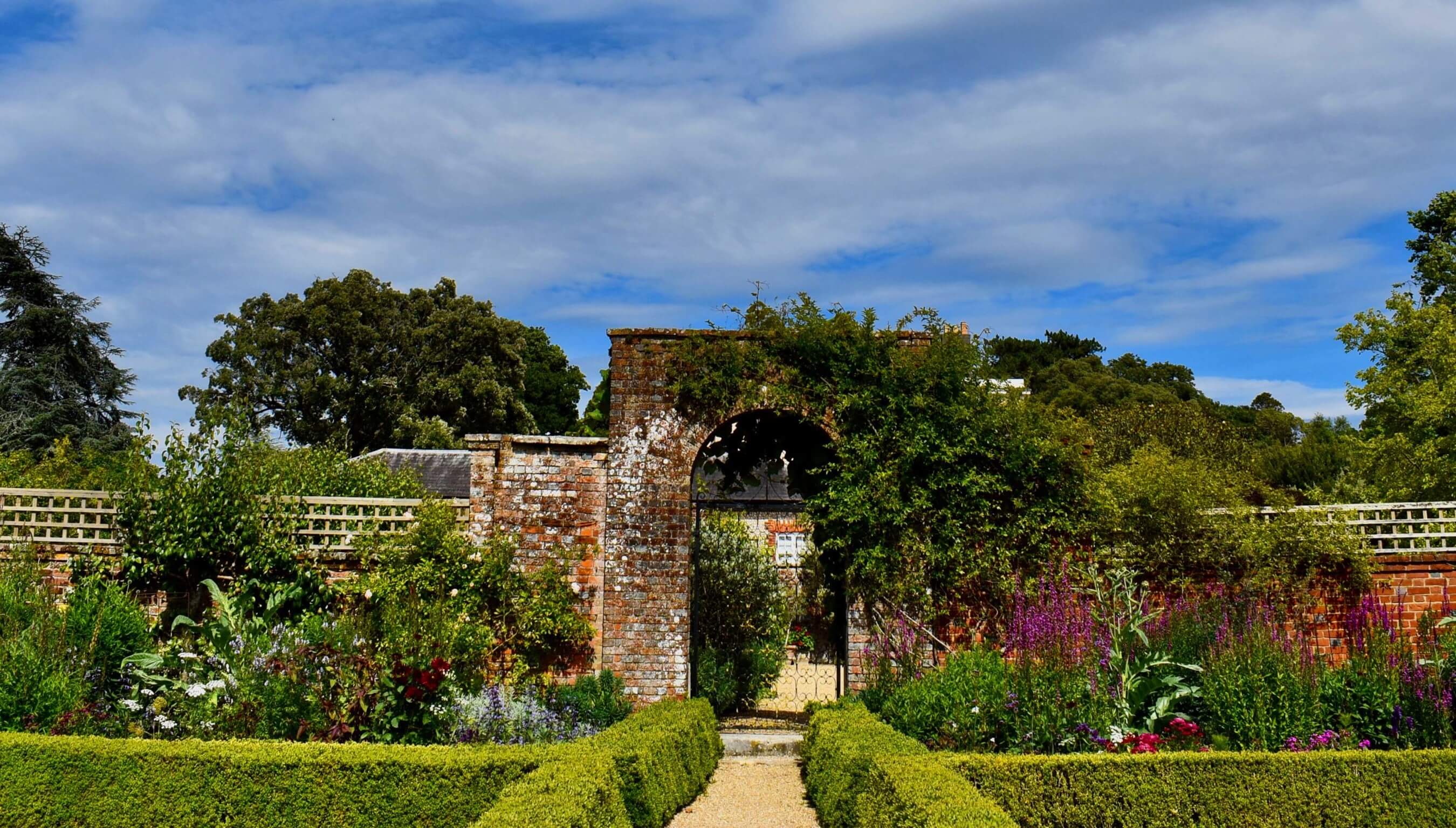
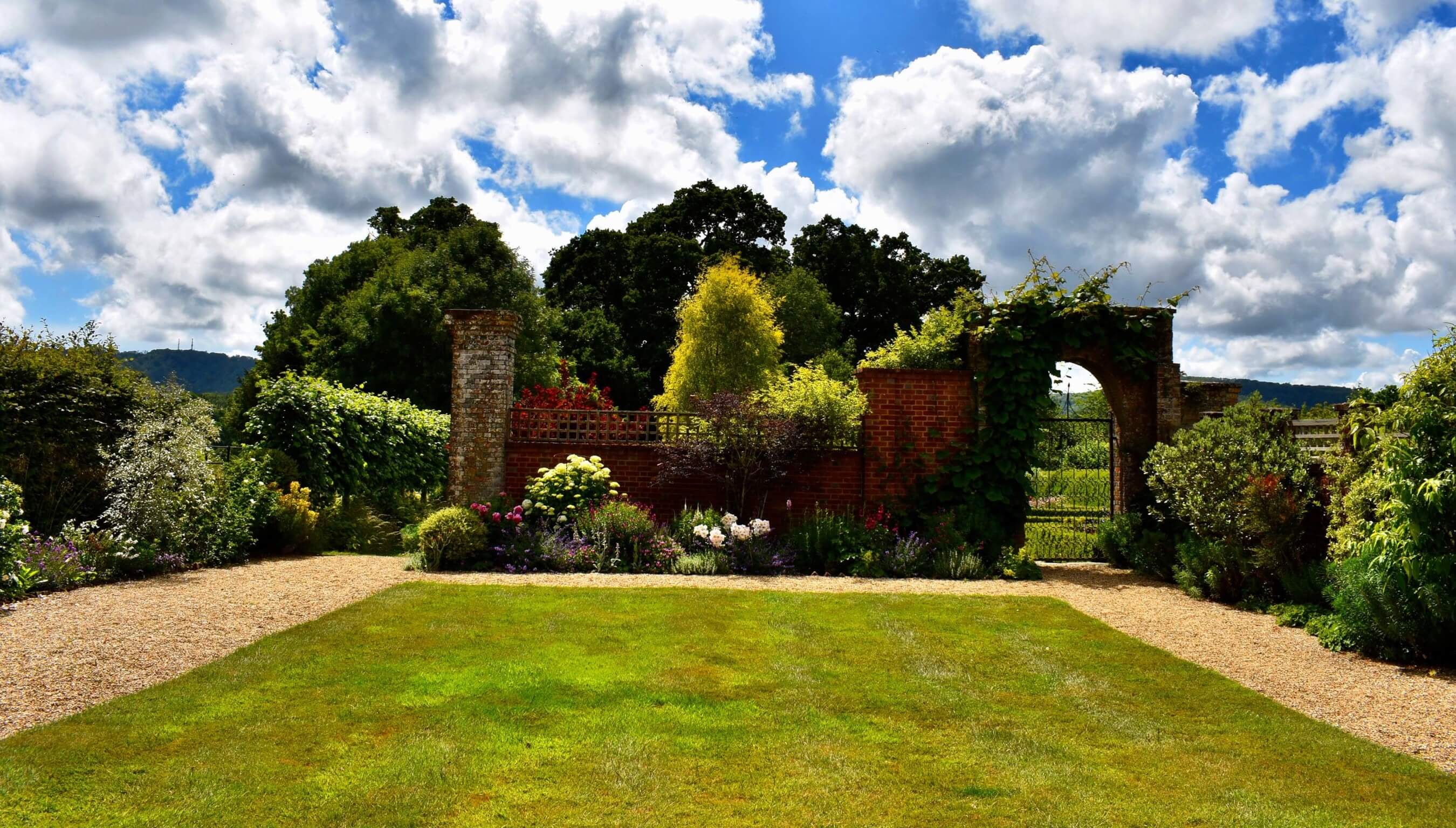
As you enter the garden through the double green doors, you will find on your immediate left a mature loquat tree (Eriobotrya japonica). Originally from China, it is unusual in that it flowers in autumn. On your right is the Orchard with apple and pear trees. After the orchard, the path leads you in to the Walled Garden. The borders consist of brightly coloured herbaceous perennials and behind the low wall is a line of pleached limes, pruned so that the South Downs are still visible in the distance.
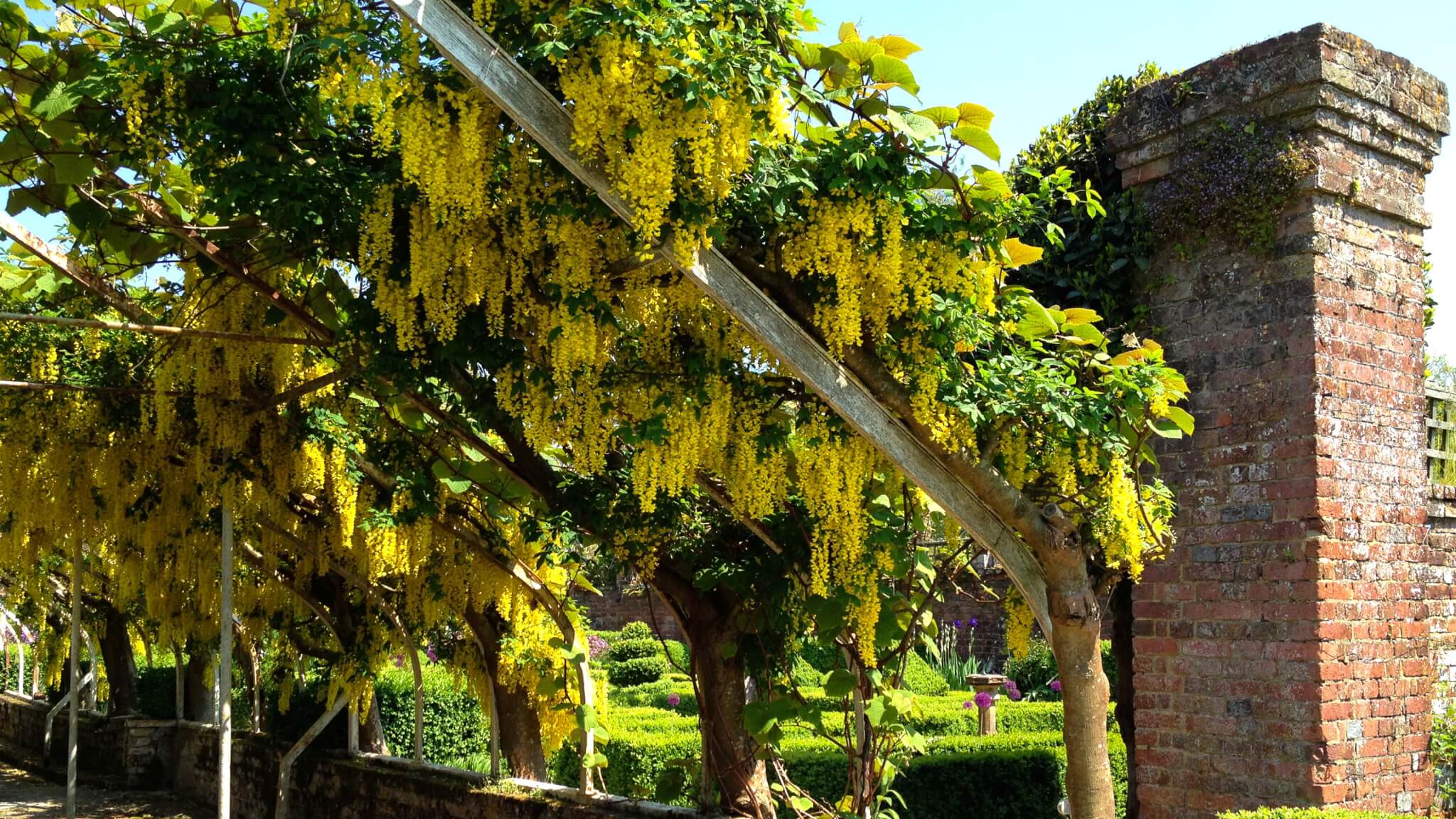
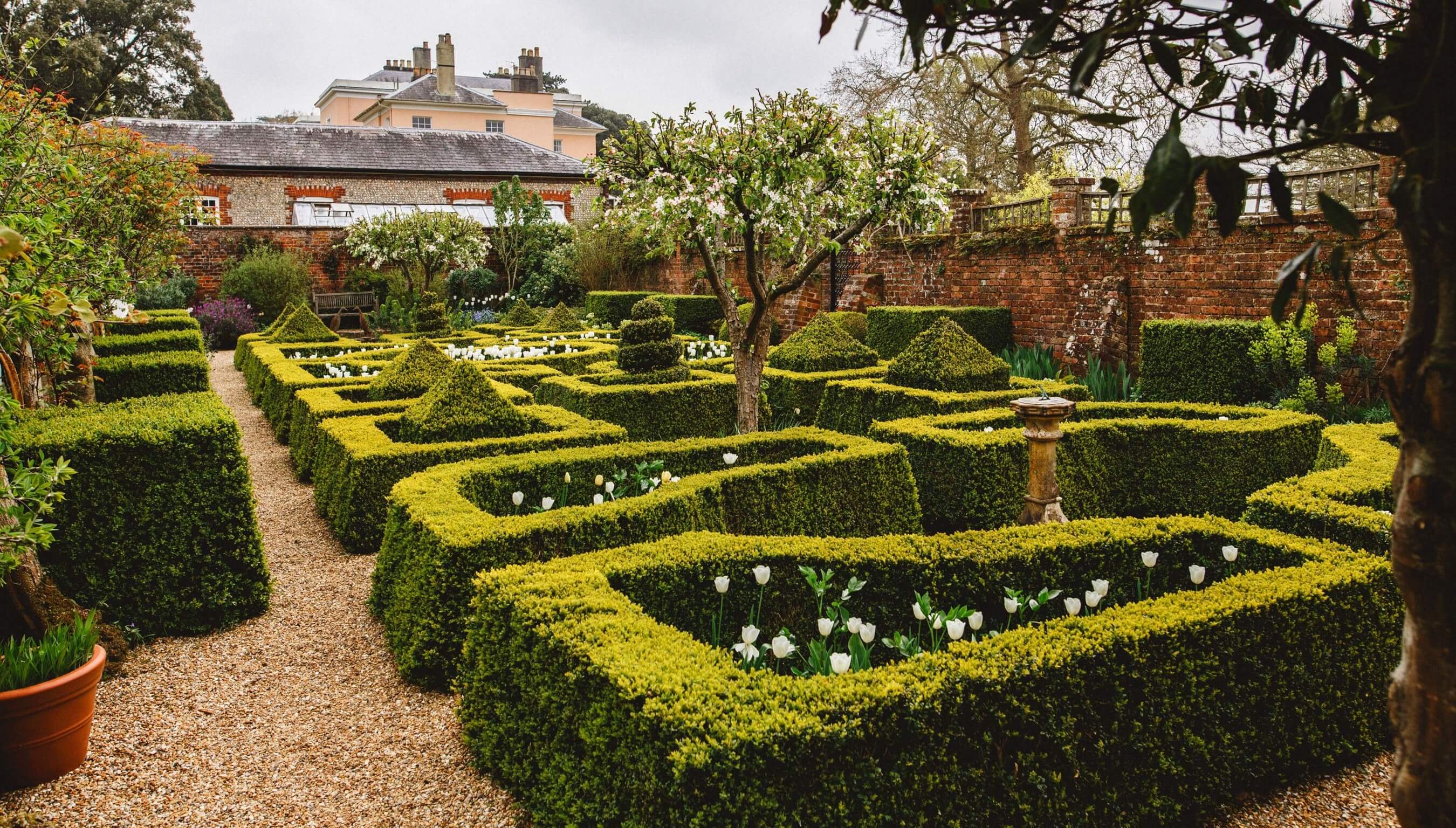
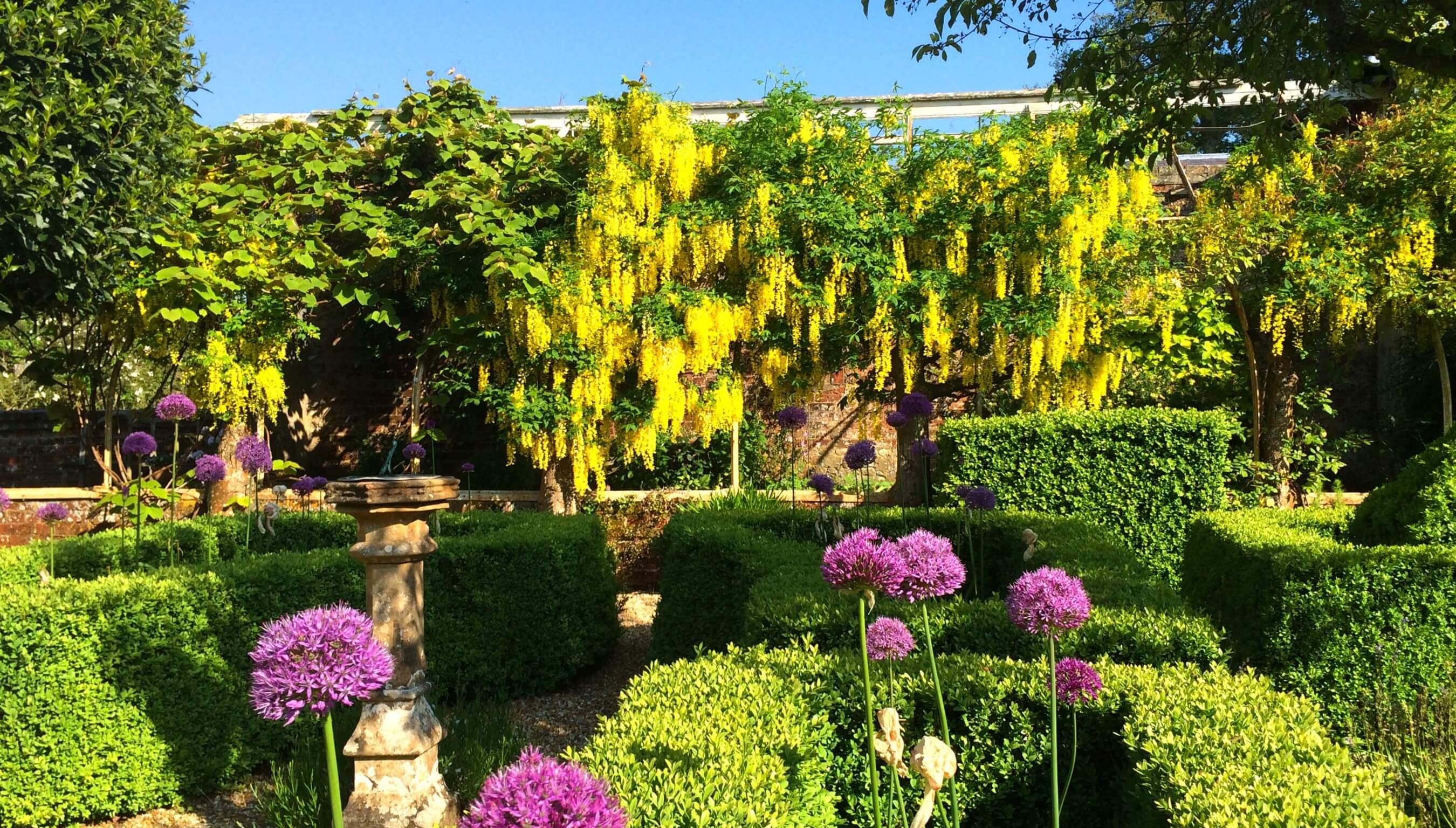
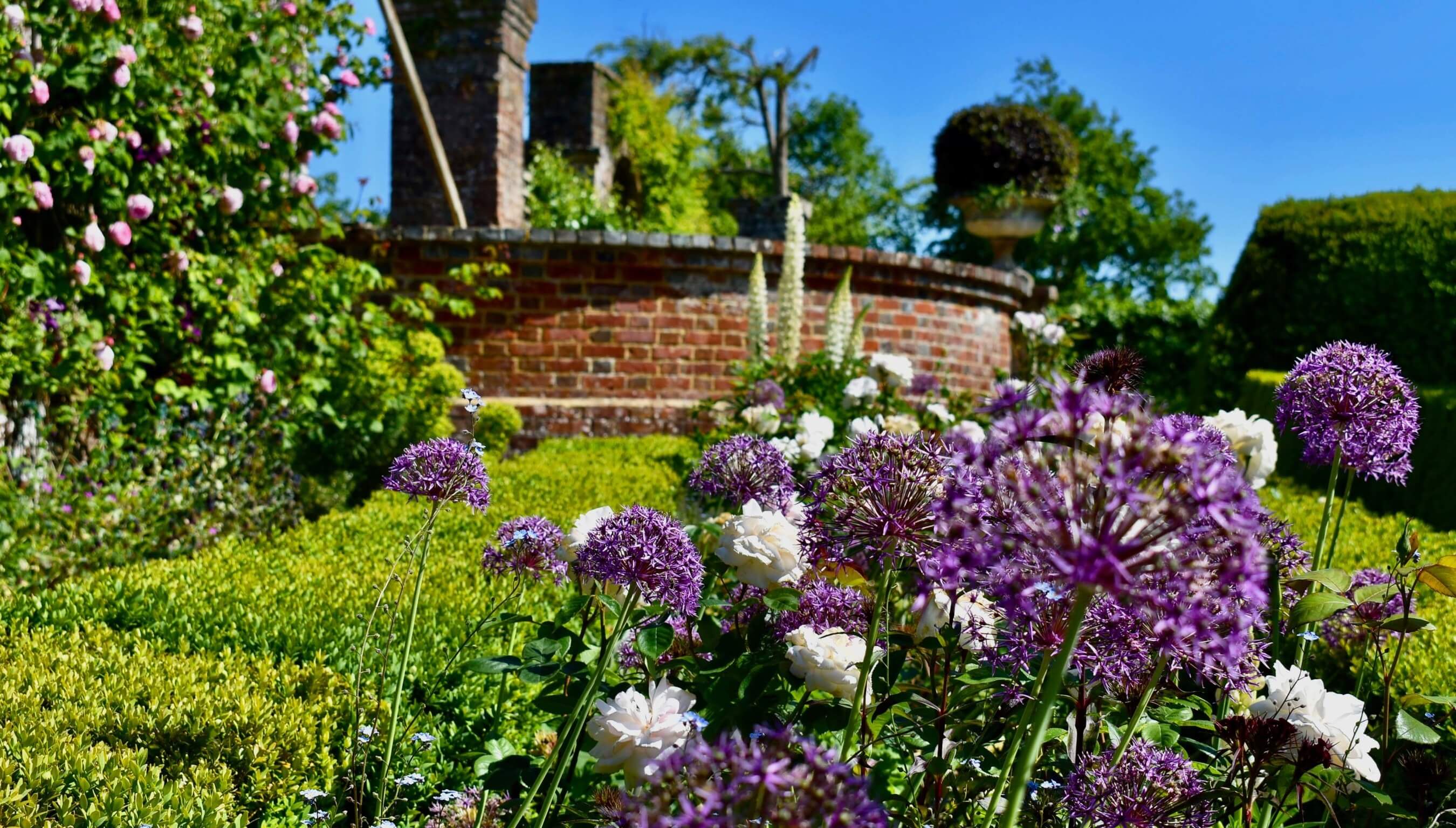
To the left of the walled garden a curved wall with an urn on top will lead you to the Dutch Garden, so called because of the traditional Dutch desire to control nature. Tightly clipped box hedges enclose buddleia and lavender, and in spring multiple tulips and alliums. A formal pond is at the east end with goldfish. Overlooking the garden are the Victorian glass-houses, the open section covered in laburnum blossom in late May and early June.
A fine scrolled iron gate leads you into the Ceremony Garden, with a bank of Rosa rugosa along the south side. At the East end is the classical Loggia, licensed for civil wedding ceremonies.
Continue along the curved gravel path to the South Lawn with its patches of camomile and a magnificent plane tree on your right. In the spring the tree is surrounded by crocuses and daffodils. As you look across the valley, the Bignor Roman Villa nestles between the first elevation and the South Downs.
On the East side of the house is the two hundred year old rare Lucombe oak (Quercus X hispanica ‘Lucombeana’). The story goes that a Mr Lucombe raised the oak in a nursery in Exeter in 1762 as a cross between Q. cerris and Q. suber. He was so taken with the original tree that he felled it to provide wood for his own coffin, and kept the boards under his bed until he died. There is another Lucombe oak at Kew Gardens.
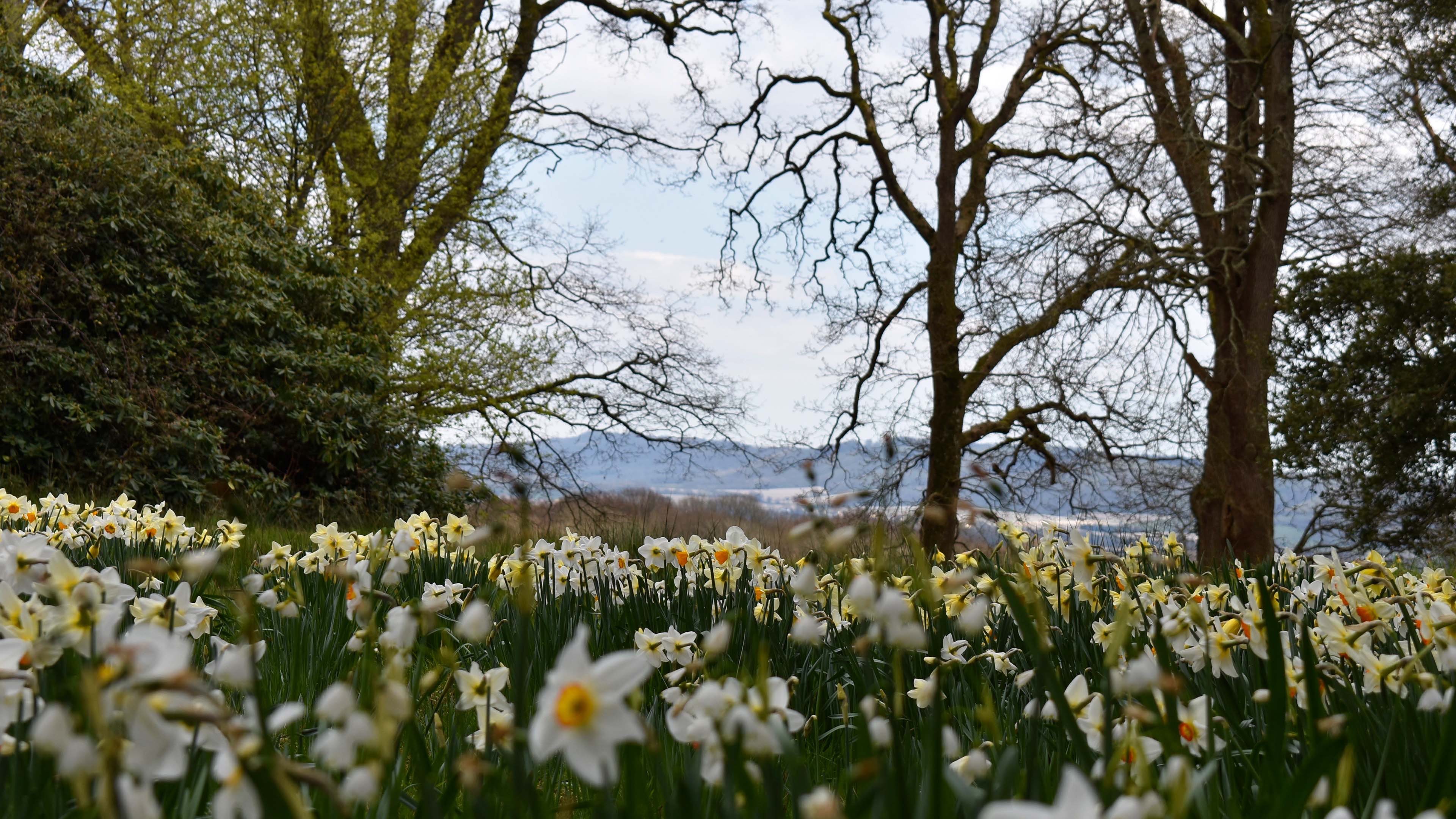
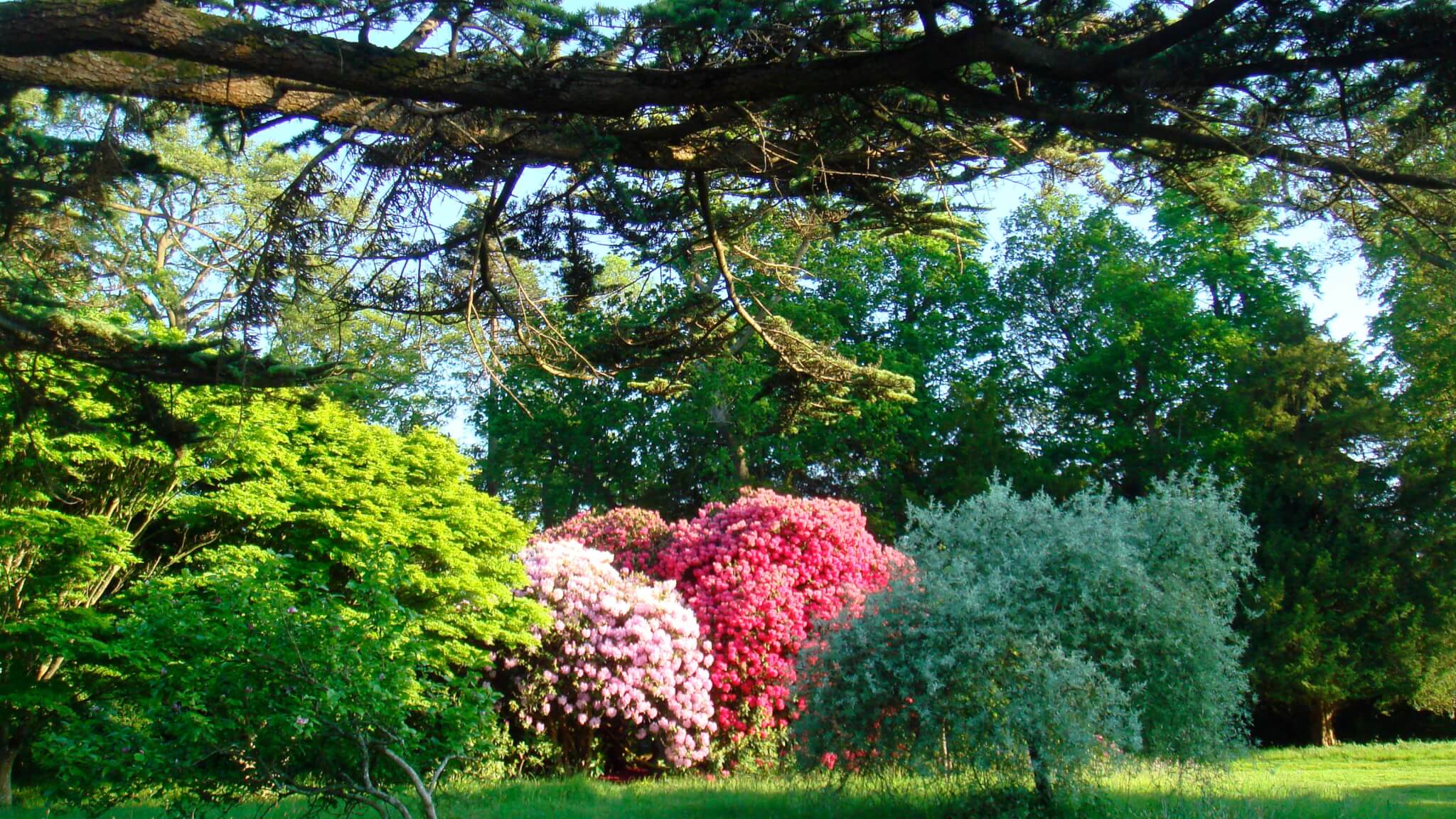
Take the path along the beech hedge next to the croquet lawn and you will see the Temple, built to commemorate the 80th birthday of Kitty Mersey, Baroness Nairne. Here and beyond are many great and smaller trees including cedar of Lebanon, shagbark hickory, sorbus, balsam and camellia. In late April, May and early June there is a magnificent display of blossoming rhododendron bushes. The far end is a sea of daffodils in the spring, commanding a fine panorama of the South Downs, Amberley Castle and Chanctonbury Ring.
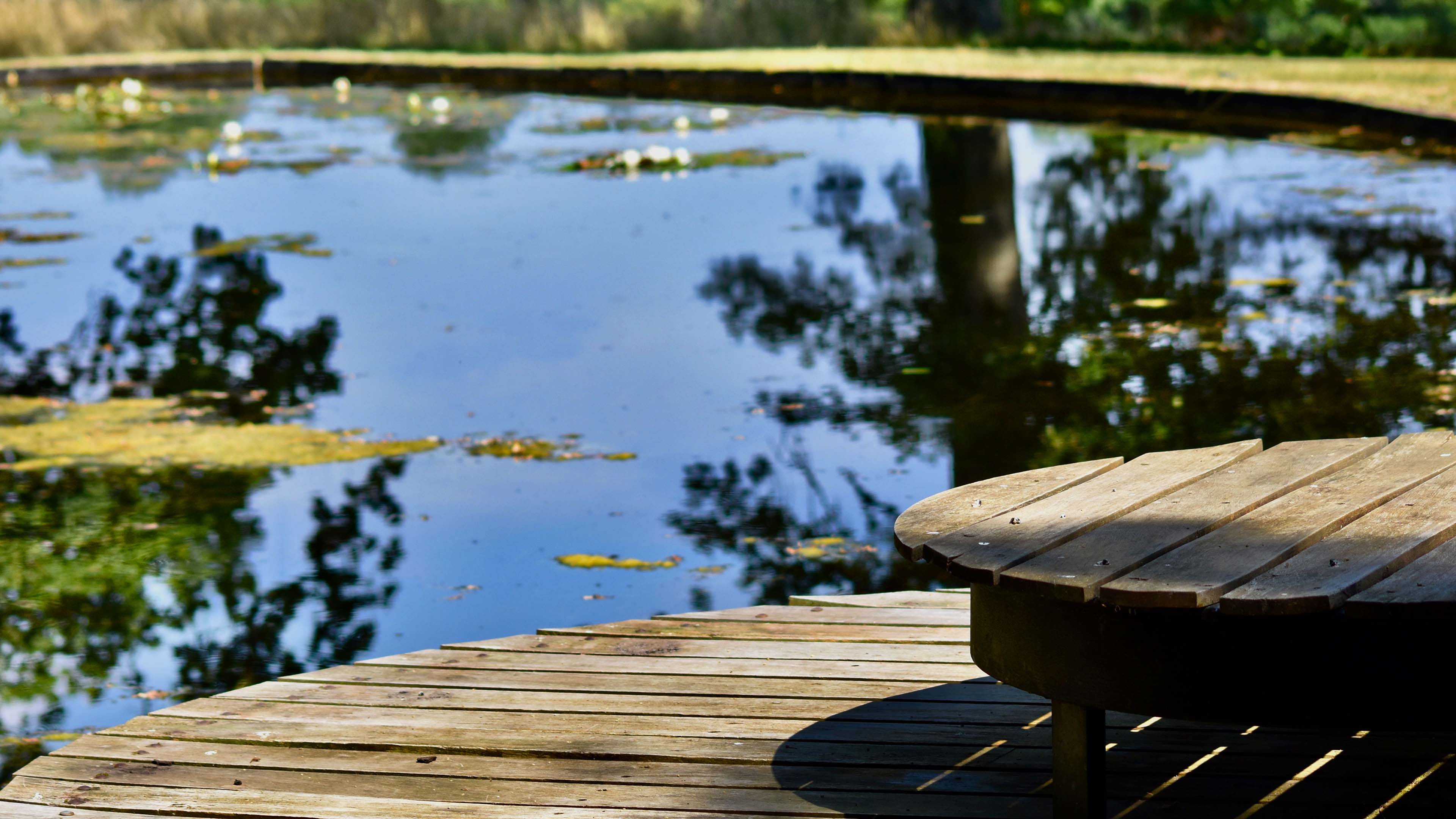
Come back to the South side of the Temple and gaze for a while at the reflections in the Zen Pond, created by Joanna Mersey where a water garden used to be one hundred years ago. Now you may wish to take the Woodland Path. This winds its way on to a little summerhouse made from a large cedar that was blown down by a storm that tossed the old summerhouse over the trees, to land in pieces below the ha-ha. In front of the present summerhouse is an area of long grass with many wild flowers including, in June, several varieties of purple orchids.
Hugh Johnson OBE, author and garden expert